Congratulations to Virginia on its new laws regulating invasive ornamental plants! A list of 39 species, if sold at a retail nursery, will have to be labeled to inform consumers that they are potentially invasive. Some provisions of the law do not take effect until January, 2027. https://lis.virginia.gov/bill-details/20251/HB1941
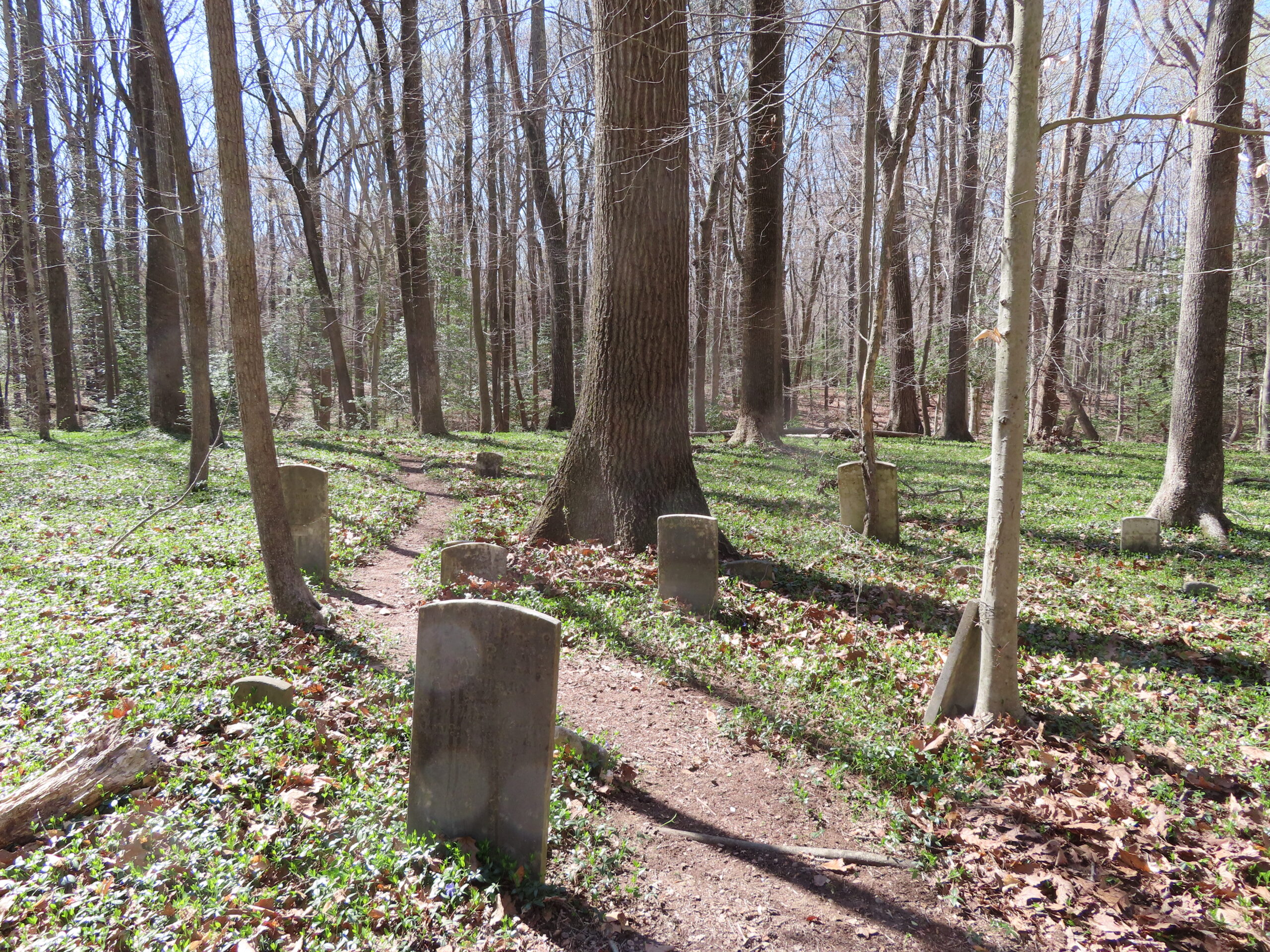
Vinca minor spreads from an old cemetery into surrounding woodlands in Maryland
Maryland updated its law listing ornamental invasive plants in June 2024 making it easier to add new species to the list, although as of April, 2025, there don’t appear to have been any new additions. Maryland has a two-tiered list with some plants banned from sale, and some requiring labeling at retail nurseries. https://extension.umd.edu/resource/invasive-plants-avoid-buying-your-yard-and-garden-maryland/
Posted inUncategorized|Comments Off on Virginia and Maryland Invasive Ornamental Plant Laws
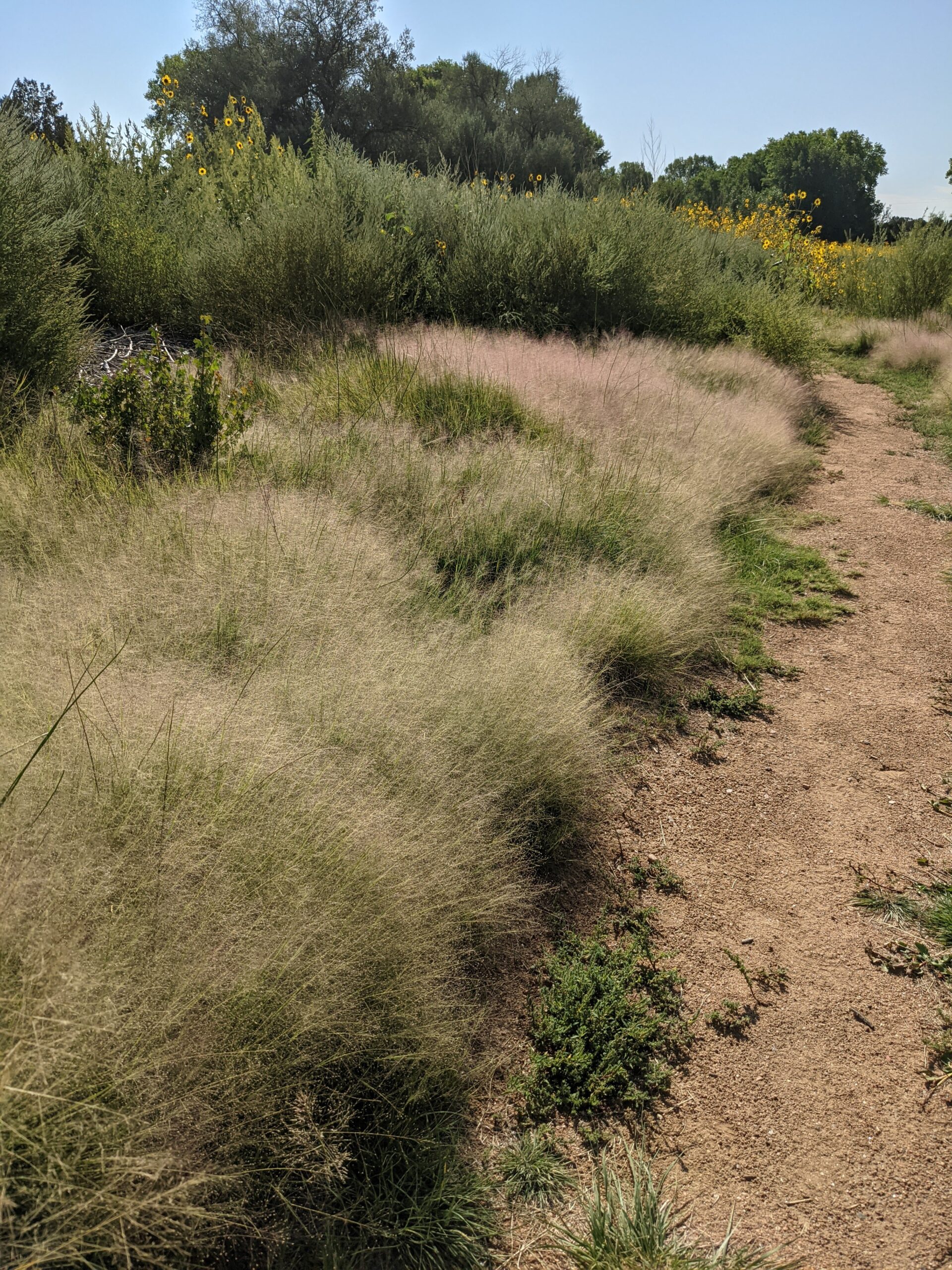
Dense growth of Sporobolus airoides along a path in New Mexico
I’ve listened to and participated in many discussions about how to outcompete invasive plants using native plant species. Competition could be used to prevent new invasions or to aid in restoration after removing invasive plants. A recent article in Restoration Ecology reports results of a sowing study done in Hungary looking at native grassland species competing against three different invasive plant species. They note that the timing of seed germination of the native and invasive species was similar and that as you might expect, high seeding rates of the native species increased their early competitive ability. A perennial grass species was the most competitive against the three (non-grass) invasive plant species.
Csákvári, E., Sáradi, N., Berki, B., Csecserits, A., Csonka, A.C., Reis, B.P., Török, K., Valkó, O., Vörös, M. and Halassy, M. (2023), Native species can reduce the establishment of invasive alien species if sown in high density and using competitive species. Restor Ecol, 31: e13901. https://doi.org/10.1111/rec.13901
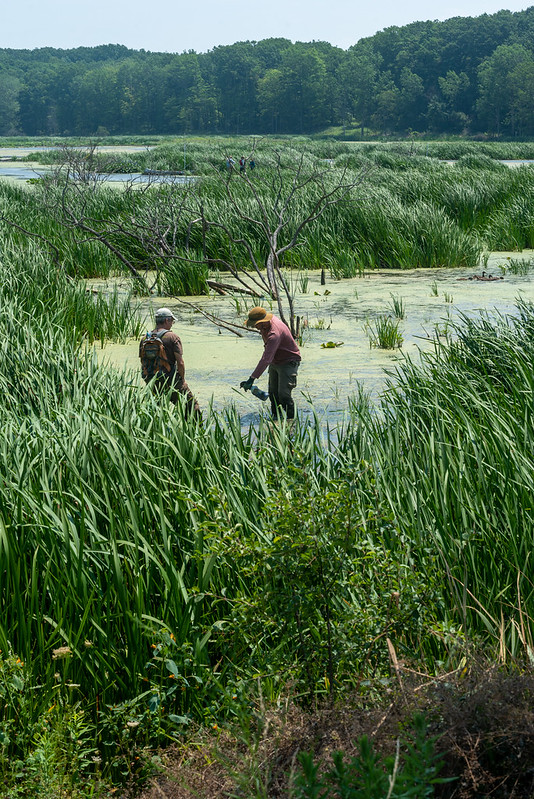
Controlling flowering rush in Mentor Marsh, Mentor, OH https://www.flickr.com/photos/buffalousace/51299006793
Introduced as an ornamental plant, and perhaps also accidentally introduced through ballast, flowering rush, Butomus umbellatus, has spread into lakes, ponds, marshes, and irrigation ditches across southern Canada and the northern United States. Several characteristics make it a great invader. It comes in two forms, a flowering diploid and a seldom-flowering triploid. Although diploid populations produce numerous seeds, both types tend to spread mainly through vegetative reproduction. They both produce rhizome buds that easily break off and float to new sites. Diploids also produce vegetative bulbils in the inflorescences. They can grow submerged, although their biomass declines in deeper water. The plant is hardy to zone 3, and in its native Europe grows from Spain to Finland.
Illustration by Jacob Sturm, 1796
When it isn’t flowering, the leaves tend to blend in among other aquatic vegetation like cattails, sweet flag, burr-reed, and iris. The sword-like leaves are weakly triangular in cross section.
My dad was out kayaking on a slough near Newport, OR with some botanists and learned
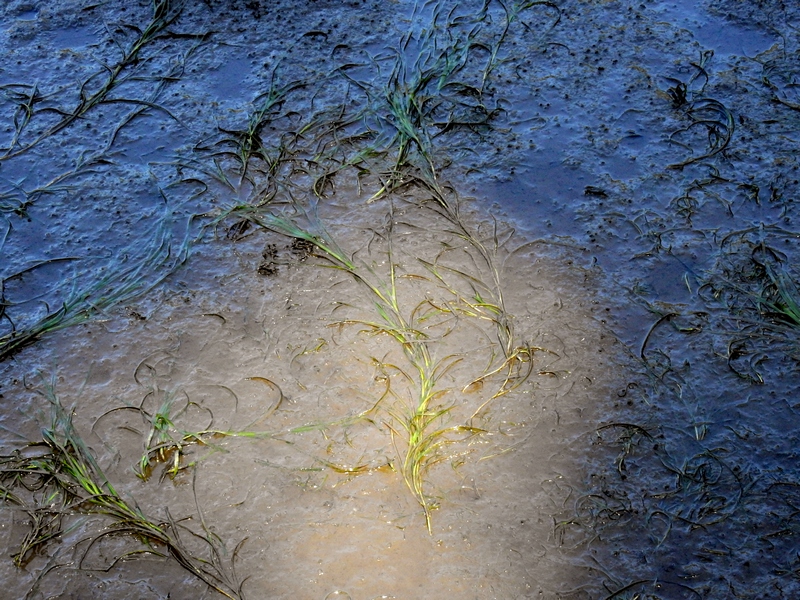
Japanese eelgrass rests on the muddy edge of a slough near Newport, OR.
about Japanese (or dwarf) eelgrass, Zostera japonica. It often occurs in the same locations as the native common eelgrass, Z. maritima, but higher in the intertidal if both species are present. It has narrower and shorter leaf blades than common eelgrass.
Japanese eelgrass probably arrived in the 1930s in shipments of Pacific oysters. It reproduces prolifically by seed and spreads by rhizomes. It has established from Humboldt Bay in CA north to the Strait of Georgia in Canada.
You can read an excellent summary about this eelgrass written by Levy Hay at University of Washington in 2011.
Posted inUncategorized|Comments Off on Japanese eelgrass in the Pacific Northwest
In another couple months the tumbleweeds will be rolling along in the western United States. Wells and Ellstrand (2016) at the University of California – Riverside documented a new hybrid species of tumbleweed, Salsola ryanii, rapidly expanding its range. Salsola ryanii is an allopolyploid species with 2 complete sets of genes from its parent species, S. tragus and S. australis.
Posted inUncategorized|Comments Off on Hybrid Tumbleweeds
Spring is here and along with it some of the more edible invasive plants. Anyone for a dish of knotweed kimchi or garlic mustard pesto pasta? Pittsburgh has gone to great lengths developing edible uses for Japanese knotweed, Fallopia japonica. One business sells it by the pound to enterprising brewers and bakers. Watch a video from the Wall Street Journal on Pittsburgh’s knotweed gourmets here, http://on.wsj.com/1YRN9g2.
The ultimate online resource for eating invasive plants (and animals) is probably Eat the Invaders. Here you can find all sorts of information and recipes on edible invaders. Bon appetit!
Posted inUncategorized|Comments Off on Eating invasives
According to the Virginia Department of Conservation and RecreationMurdannia has no known common name and generally goes by Anielema, its former Latin name. The USDA PLANTS website calls it wartremoving herb and Invasive.org calls it marsh dayflower. Maryland Extension calls it marsh dewflower or Asiatic dayflower. The leaves and stems do resemble Asiatic dayflower (Commelina communis). I don’t know about it’s wart-removing powers.
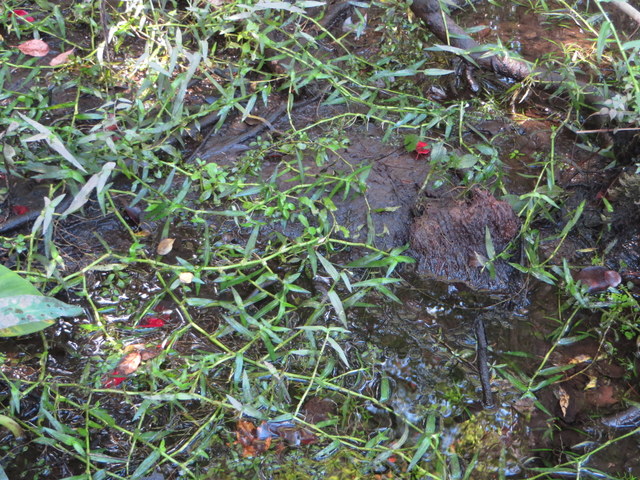
Murdannia keisak in a marsh on the Maryland Coastal Plain.
Look for mats of Murdannia keisak in freshwater ponds and marshes and along the edges of streams and canals. It probably arrived in the US from eatern Asia in the 1920s or 30s as a weed of rice cultivation but it has unfortunately spread to natural areas. It forms dense mats blocking light to plants below. Plants produce thousands of small seeds eaten by ducks and other waterfowl, and the plants spread vegetatively.
Small stands could be hand-pulled before flowering taking care to remove all fragments of the plant. Larger stands are usually treated using biodegradable herbicides.
Posted inUncategorized|Comments Off on Murdannia keisak is making a name for itself
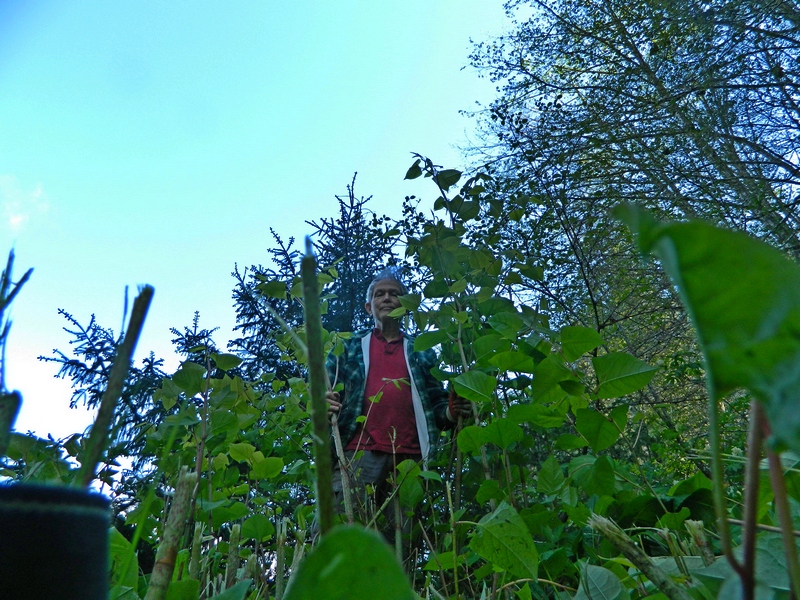
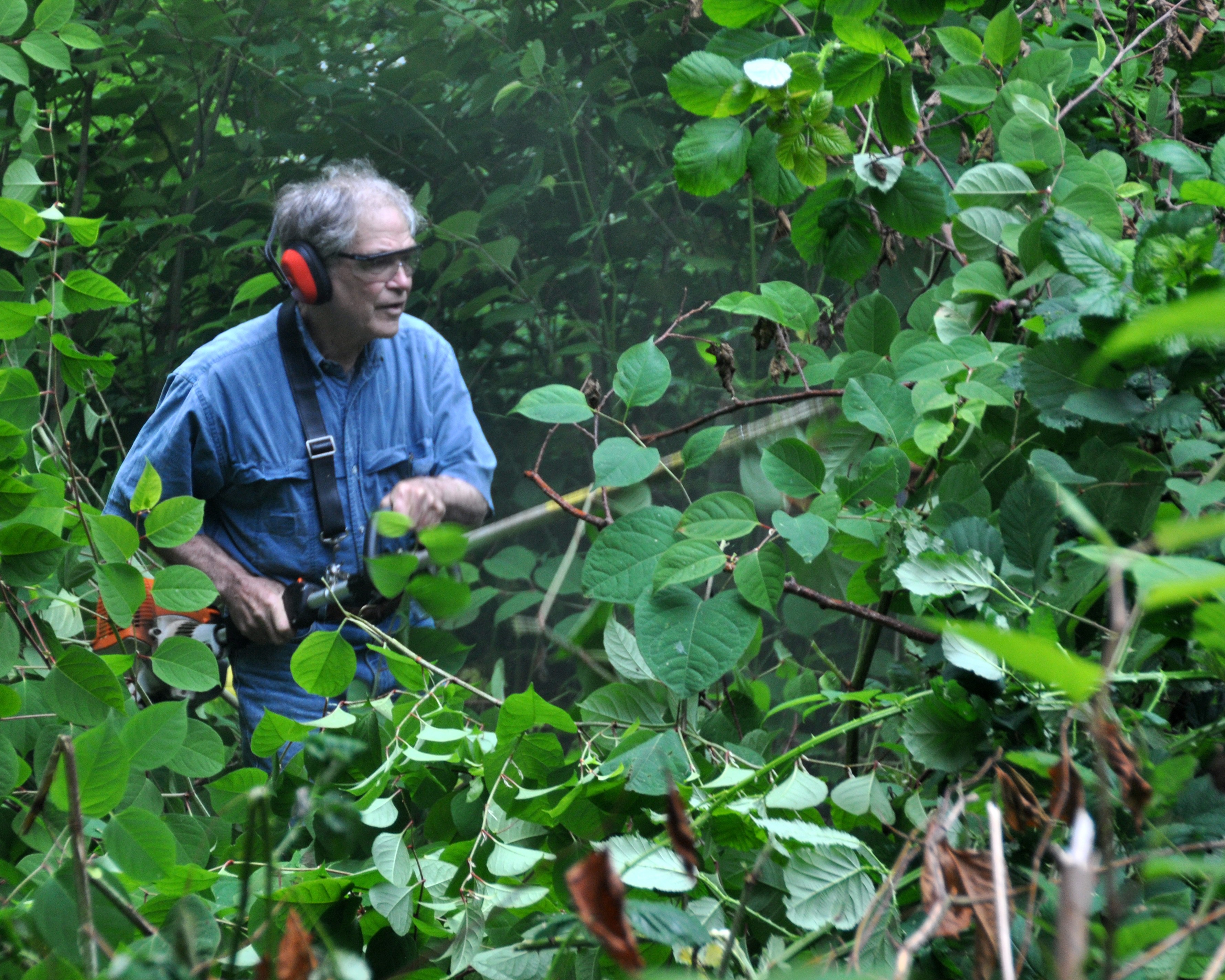
April 24, 2015. Along the west bank of Poole Slough, 4 miles east of the Pacific Ocean and Newport, OR. Here begins the first battle of the third year against the dense stand of giant knotweed that took over about an acre of land where an old barn and a few apple trees stood 60 years ago. When the first battle began in late summer 2012 the knotweed stood in an almost pure stand, stalks up to 10 feet high and two inches thick, two or three stalks from one root, plants 6 to 12 inches apart. Although I cut before they flower, the roots send out new stalks all summer and again in the spring. The stalks are hollow cylinders closed off at knots every 6 to 12 inches. Dried stalks make good pan pipes and flutes. Fresh young stalks can be peeled and cooked as vegetables.
Since the plants begin storing carbohydrates in the roots in early summer, I’ll cut again then and again in the fall. As the lower growing natives begin to compete, the prospects are that I can begin regular mowing with a blade set high to allow low natives to grow while preventing the knotweeds from replenishing their roots.
Each year the stand has been slower growing, stalks slimmer, and height diminished. Here is a scene from the very first attack 3 years ago.
Posted inUncategorized|Comments Off on Giant knotweed keeps coming up
Sylvan Kaufman and Wallace Kaufman are the authors of Invasive Plants: Guide to Identification and the Impacts and Control of Common North American Species published by Stackpole Books. Here we update you on the latest research, control techniques, news and issues surrounding invasive plants.